

Introduction
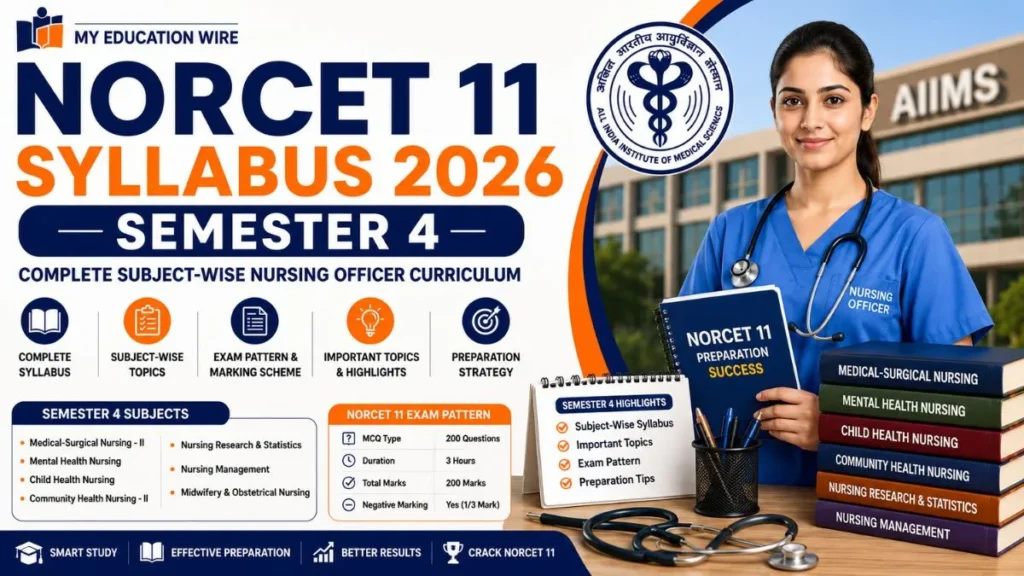
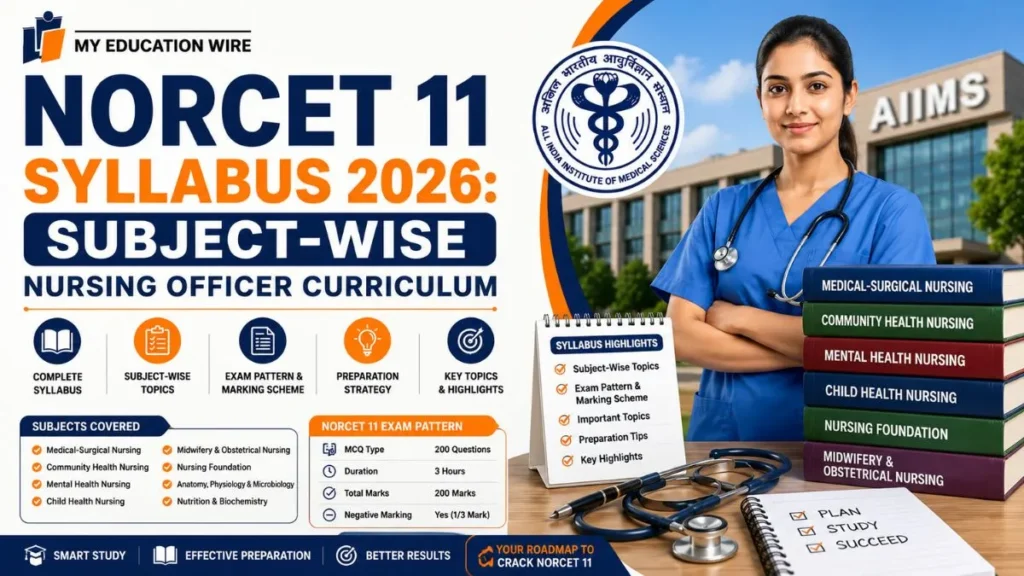
The Pathology, Genetics, and Community Health Nursing sections of the NORCET 11 Syllabus 2026 Semester 4 provide a strong foundation for understanding disease mechanisms, hereditary disorders, diagnostic procedures, and public health principles. These subjects help nursing professionals develop the knowledge and skills required for accurate assessment, prevention, and management of various health conditions. A clear understanding of pathology and genetics enables nurses to deliver evidence-based and patient-centered care.
Overview
The syllabus covers special and clinical pathology, including diseases of the renal, reproductive, breast, and nervous systems, along with laboratory investigations such as CSF, urine, stool, and semen analysis. Genetics focuses on inheritance patterns, chromosomal abnormalities, prenatal influences, genetic screening, counseling, and the role of nurses in genetic services. Community Health Nursing emphasizes environmental sanitation, nutrition, epidemiology, communicable and non-communicable diseases, demography, and interpretation of health statistics, preparing nurses for community-based healthcare delivery.
Section 1: Special & Clinical Pathology
Unit I: Special Pathology (Systemic Tissue Changes)
- Renal & Urinary Tract: Glomerulonephritis shows immune-driven hypercellular glomeruli. Pyelonephritis features interstitial neutrophilic infiltration. Calculi cause localized structural obstruction. Renal Cell Carcinoma is characterized by “clear cells” microscopically. Renal failure advances from acute tubular necrosis to chronic glomerulosclerosis and fibrosis.
- Male Genital System: Cryptorchidism leads to tubular atrophy and raises malignancy risks. Testicular atrophy presents with basement membrane thickening and germ cell loss. BPH shows nodular glandular and stromal hyperplasia. Prostatic carcinoma presents as an adenocarcinoma, typically in the peripheral zone.
- Female Genital System & Breast: Cervical carcinoma is linked to high-risk HPV and shows invasive squamous cell changes. Endometrial carcinoma presents with atypical, crowded glands. Uterine fibroids show whorled smooth muscle cells. Molar pregnancies display hydropic villi, while breast carcinoma features malignant epithelial cords within dense stroma.
- Central Nervous System: Acute bacterial meningitis presents with a purulent neutrophilic exudate in the subarachnoid space. Encephalitis causes perivascular lymphocytic cuffing. Ischemic stroke leads to liquefactive necrosis and red neurons, while Glioblastoma Multiforme shows pseudopalisading necrosis.
Unit II: Clinical Pathology (Lab Diagnostics)
- Body Fluids & Semen Analysis: Lumbar puncture collects CSF to differentiate bacterial meningitis (high neutrophils, low glucose) from viral forms. Semen analysis assesses volume, sperm count, motility, and morphology to identify male-factor infertility. Nurses coordinate rapid, sterile sample delivery to the laboratory.
- Urine & Feces Examination: Urine tests combine physical, chemical (dipstick for protein, nitrites, glucose), and culture methods using midstream clean-catch samples. Fecal analyses check for parasites, ova, reducing substances, and use Fecal Occult Blood Testing (FOBT) to screen for occult gastrointestinal bleeding.
Section 3: Genetics
Units I & II: Genetic Principles & Prenatal Influences
- Foundations of Genetics: NORCET Nursing Syllabus 2026 Focuses on chromosomal structures, mitosis, meiosis, and Mendelian inheritance patterns (dominant/recessive). Aberrations like trisomies represent numerical errors, while mutations are changes in DNA transmission. Nurses help families evaluate hereditary health risks.
- Developmental Defects & Teratogenesis: Advanced maternal age increases the risk of chromosomal non-disjunction (Down Syndrome/Trisomy 21). Consanguinity raises the incidence of autosomal recessive conditions. Maternal TORCH infections and teratogenic drugs cause structural defects. Pre-conceptional Folic Acid lowers the risk of Neural Tube Defects (NTDs).
Units III, IV & V: Lifespan Screening, Services & Nursing Roles
- Neonatal, Adult & Clinical Genetic Services: Newborn screening detects congenital anomalies and inborn errors of metabolism (PKU) early. Adult genetics monitors familial cancers (BRAC1/2) and Huntington’s disease. Services offer karyotyping, gene therapy, and non-directive genetic counseling. Nurses identify at-risk families, coordinate testing, and safeguard genetic privacy.
Section 4: Community Health Nursing & Epidemiology
Unit I: Fundamentals of Community Health Nursing
- Community Health Frameworks: Integrates public health principles with clinical practice to promote health, prevent disease, and address health determinants across populations. Nurses act as educators and managers, using multi-sector Public-Private Partnerships (PPP) to improve primary healthcare delivery.
Unit II: Determinants of Health (Sanitation & Nutrition)
- Environmental Health & Vector Control: Focuses on safe water purification, proper ventilation, and sanitary solid/liquid waste disposal (such as water-seal latrines). Integrated Vector Management (IVM) controls disease vectors like mosquitoes and rodents to interrupt transmission chains.
- Nutrition & Food Hygiene: Evaluates nutritional status via anthropometrics and clinical exams. Addresses national deficiencies like Protein-Energy Malnutrition (PEM) and micronutrient deficits (anemia, Vitamin A blindness) through national programs like Poshan Abhiyaan and targeted food fortification.
Unit III: Epidemiology & Disease Management
- Epidemiological Methods: NORCET 11 Syllabus 2026 Uses the agent-host-environment triad to analyze morbidity and mortality trends. Employs descriptive and analytical research methods, applies the four levels of prevention (primordial, primary, secondary, tertiary), and establishes systematic steps for outbreak investigations.
[Primordial] ----> [Primary] -------> [Secondary] -----> [Tertiary]
(Alter Social      (Vaccination/     (Early Screening/   (Rehabilitation/
 Determinants)      Health Ed)        Prompt Tx)          Disability Limit)
- Communicable Diseases: Coordinates the tracking, containment, and home management of airborne/respiratory infections (TB, COVID-19), intestinal tract infections (Cholera, Typhoid), vector-borne diseases (Malaria, Dengue), and surface or direct-contact infections (Leprosy, HIV/AIDS).
- Non-Communicable Diseases (NCDs): Focuses on community screening, lifestyle modification, and long-term care plans for chronic conditions like hypertension, diabetes, stroke, and cancers, aligned with national initiatives like the NPCDCS program.
Unit IV: Demography & Data Interpretation
- Demography & Vital Statistics: Tracks population dynamics through the demographic cycle and records vital events using population indices (CBR, IMR, MMR). Community health nurses collect, interpret, and present health data to guide evidence-based public health interventions.
Pharmacology II Table
| Unit | Content |
| I | Drugs used in disorders of ear, nose, throat & Eye • Antihistamines • Topical applications for eye (Chloramphenicol, Gentamycin eye drops), ear (Soda glycerin, boric spirit ear drops), nose and buccal cavity-chlorhexidine mouthwash • Composition, action, dosage, route, indications, contraindications, drug interactions, side effects, adverse effects, toxicity and role of nurse |
| II | Drugs used on urinary system • Pharmacology of commonly used drugs ◦ Renin angiotensin system ◦ Diuretics and antidiuretics ◦ Drugs toxic to kidney ◦ Urinary antiseptics ◦ Treatment of UTI – acidifiers and alkalinizers • Composition, action, dosage, route, indications, contraindications, Drug interactions, side effects, adverse effects toxicity and role of nurse |
| III | Drugs acting on nervous system • Basis & applied pharmacology of commonly used drugs • Analgesics and anaesthetics ◦ Analgesics: Non-steroidal anti-inflammatory (NSAID) drugs ◦ Antipyretics ◦ Opioids & other central analgesics ✓ General (techniques of GA, pre anesthetic medication) & local anesthetics ✓ Gases: oxygen, nitrous, oxide, carbon-dioxide & others • Hypnotics and sedatives • Skeletal muscle relaxants • Antipsychotics ◦ Mood stabilizers • Antidepressants • Antianxiety Drugs • Anticonvulsants • Drugs for neurodegenerative disorders & miscellaneous drugs • Stimulants, ethyl alcohol and treatment of methyl alcohol poisoning • Composition, action, dosage, route, indications, contraindications, drug interactions, side effects, adverse effects toxicity and role of nurse |
| IV | Drugs used for hormonal, disorders and supplementation, contraception and medical termination of pregnancy • Estrogens and progesterones ◦ Oral contraceptives and hormone replacement therapy • Vaginal contraceptives • Drugs for infertility and medical termination of pregnancy ◦ Uterine stimulants and relaxants • Composition, actions dosage route indications contraindications, drugs interactions, side effects, adverse effects, toxicity and role of nurse |
| V | Drugs used for pregnant women during antenatal, labour and postnatal period • Tetanus prophylaxis • Iron and Vit K1 supplementation • Oxytocin, Misoprostol • Ergometrine • Methyl prostaglandin F2-alpha • Magnesium sulphate • Calcium gluconate |
| VI | Miscellaneous • Drugs used for deaddiction • Drugs used in CPR and emergency- adrenaline, Chlorpheniramine, hydrocortisone, Dexamethasone • IV fluids & electrolytes replacement • Common poisons, drugs used for treatment of poisoning ◦ Activated charcoal ◦ Ipecac ◦ Antidotes, ◦ Anti-snake venom (ASV) • Vitamins and minerals supplementation • Vaccines & sera (Universal immunization program schedules) • Anticancer drugs: Chemotherapeutic drugs commonly used • Immuno-suppressants and Immunostimulants |
| VII | Introduction to drugs used in alternative systems of medicine • Ayurveda, Homeopathy, Unani and Siddha etc. • Drugs used for common ailments |
| VIII | Fundamental principles of prescribing • Prescriptive role of nurse practitioners: Introduction • Legal and ethical issues related to prescribing • Principles of prescribing • Steps of prescribing • Prescribing competencies |
Read the complete NORCET 11 Semester wise Syllabus 2026 here.
Pathology and Genetics Table
| Unit | Content |
| I (Cont.) | Special Pathology: Pathological changes in disease conditions of selected systems 1. Kidneys and Urinary tract • Glomerulonephritis • Pyelonephritis • Renal calculi • Cystitis • Renal Cell Carcinoma • Renal Failure (Acute and Chronic) 2. Male genital systems • Cryptorchidism • Testicular atrophy • Prostatic hyperplasia • Carcinoma penis and Prostate. 3. Female genital system • Carcinoma cervix • Carcinoma of endometrium • Uterine fibroids • Vesicular mole and Choriocarcinoma • Ovarian cyst and tumors 4. Breast • Fibrocystic changes • Fibroadenoma • Carcinoma of the Breast 5. Central nervous system • Meningitis. • Encephalitis • Stroke • Tumors of CNS |
| II | Clinical Pathology • Examination of body cavity fluids: ◦ Methods of collection and examination of CSF and other body cavity fluids (sputum, wound discharge) specimen for various clinical pathology, biochemistry and microbiology tests • Analysis of semen: ◦ Sperm count, motility and morphology and their importance in infertility • Urine: ◦ Physical characteristics, Analysis, Culture and Sensitivity • Faeces: ◦ Characteristics ◦ Stool examination: Occult blood, Ova, Parasite and Cyst, Reducing substance etc. ◦ Methods and collection of urine and faeces for various tests |
Genetics (Course Outline) Table
| Unit | Content |
| I | Introduction: • Practical application of genetics in nursing • Impact of genetic condition on families • Review of cellular division: mitosis and meiosis • Characteristics and structure of genes • Chromosomes: sex determination • Chromosomal aberrations • Patterns of inheritance • Mendelian theory of inheritance • Multiple allots and blood groups • Sex linked inheritance • Mechanism of inheritance • Errors in transmission (mutation) |
| II | Maternal, prenatal and genetic influences on development of defects and diseases • Conditions affecting the mother: genetic and infections • Consanguinity atopy • Prenatal nutrition and food allergies • Maternal age • Maternal drug therapy • Prenatal testing and diagnosis • Effect of Radiation, drugs and chemicals • Infertility • Spontaneous abortion • Neural Tube Defects and the role of folic acid in lowering the risks • Down syndrome (Trisomy 21) |
| III | Genetic testing in the neonates and children • Screening for ◦ Congenital abnormalities ◦ Developmental delay ◦ Dysmorphism |
| IV | Genetic conditions of adolescents and adults • Cancer genetics: Familial cancer • Inborn errors of metabolism • Blood group alleles and hematological disorder • Genetic haemochromatosis • Huntington’s disease • Mental illness |
| V | Services related to genetics • Genetic testing • Gene therapy • Genetic counseling • Legal and Ethical issues • Role of nurse |
Professionalism, Professional Values and Ethics including Bioethics Table
| Unit | Content |
| I | Introduction to Community Health and Community Health Nursing • Definition, concept and dimensions of health • Promotion of Health ◦ Maintenance of Health • Determinants of Health • Components of Community Health • Evolution and development of Community Health Nursing: Worldwide and India • Concepts and Definition of Community, Community Health, and Community Health Nursing • Philosophical and ethical base of community health nursing • Objectives and Scope of Community Health Nursing Practice • Qualities and Functions of Community Health Nurse Practice • Intersectoral coordination and Public-Private Partnership (PPP) |
| II | Determinants of Health • Environmental Health & Sanitation: ◦ Concept of environment and sanitation, environmental factors affecting health ◦ Water: Sources, characteristics of safe and wholesome water, uses, pollution, waterborne diseases, protection of water sources, purification of water (large & small scale) ◦ Air: Atmospheric pollution, sources, indicators, health effects, prevention and control ◦ Ventilation: Types, standards of ventilation ◦ Light: Requirements of good lighting, sources, artificial lighting, biological effects ◦ Noise: Sources, effects, prevention, and control ◦ Housing: Social goals, criteria for healthful housing, housing and health ◦ Disposal of waste: ▪ Solid waste: Refuse, storage, collection, methods of disposal (dumping, controlled tipping, incineration, composting, manure pits, burial) ▪ Liquid waste: Sullage and sewage, sewage system, modern methods of sewage treatment ▪ Excreta disposal: Unsewered areas, latrines (Borehole, Dug well, Water seal, RCA etc.) ◦ Arthropods of Public Health Importance: Mosquitoes, flies, lice, fleas, ticks, mites, rodents (Life cycle, diseases transmitted, control measures: Integrated Vector Management) ◦ Radiation: Sources, effects, protection ◦ Institutional Sanitation: Schools, workplaces, food establishments etc. • Nutrition and Health: ◦ Concept of nutrition and health ◦ Nutrients: Classification, functions, sources, requirements, deficiency states ◦ Balanced diet, nutrition for different age groups, vulnerable groups ◦ Nutritional assessment of community: Anthropometry, clinical, dietary, laboratory methods ◦ Nutritional problems in India: Protein Energy Malnutrition (PEM), Micronutrient deficiencies (Vitamin A, Iodine, Iron), Fluorosis etc. ◦ Social and cultural factors in nutrition ◦ Food hygiene, food preservation, food adulteration, food acts ◦ National Nutritional Programs and policies |
| III | Epidemiology and Nursing Management of Communicable and Non-communicable Diseases • Epidemiology: ◦ Definition, concept, aims and scope ◦ Epidemiological triad: Agent, host, and environment ◦ Measurements in epidemiology (Mortality, Morbidity) ◦ Epidemiological methods: Descriptive, Analytical, Experimental ◦ Uses of epidemiology ◦ Association and causation, concepts of prevention (Primordial, Primary, Secondary, Tertiary) ◦ Screening for diseases: Concept, types, criteria for screening ◦ Surveillance and monitoring: Concept, types, integrated disease surveillance project (IDSP) ◦ Investigation of an epidemic: Steps • Communicable Diseases: ◦ Epidemiology and nursing management of common communicable diseases: ▪ Respiratory infections: Smallpox, Chickenpox, Measles, Rubella, Mumps, Influenza, Diphtheria, Pertussis, Tetanus, Meningococcal meningitis, Acute Respiratory Infections (ARI), Tuberculosis, SARS, COVID-19 etc. ▪ Intestinal infections: Poliomyelitis, Viral Hepatitis, Cholera, Typhoid fever, Food poisoning, Amoebiasis, Diarrhoeal diseases, Hookworm infection, Ascariasis etc. ▪ Arthropod-borne infections: Malaria, Filaria, Dengue, Chikungunya, Plague, Japanese Encephalitis etc. ▪ Zoonoses: Rabies, Brucellosis, Leptospirosis, Anthrax, Plague, KFD etc. ▪ Surface infections: Trachoma, Tetanus, Leprosy, STD, HIV/AIDS etc. ◦ Emerging and re-emerging infectious diseases ◦ Nursing Management in community: Home care, isolation, notification, quarantine, disinfection, immunization, health education, referral, documentation • Non-Communicable Diseases: ◦ Epidemiology and nursing management of common non-communicable diseases: ▪ Hypertension, Coronary Heart Disease (CHD), Stroke ▪ Cancer (Cervical, Breast, Oral etc.) ▪ Diabetes Mellitus, Obesity, Blindness ▪ Chronic Obstructive Pulmonary Disease (COPD), Asthma ▪ Mental health disorders, Substance abuse, Accidents and injuries ◦ Risk factors: Modifiable and non-modifiable ◦ Prevention and control strategies: Population strategy, High-risk strategy ◦ National programs for prevention and control of NCDs (NPCDCS etc.) ◦ Role of community health nurse in screening, early detection, referral, lifestyle modification, home care, rehabilitation, and follow-up |
| IV | Demography, Surveillance and Interpretation of Data • Demography: ◦ Definition, concept, scope ◦ Demography cycle ◦ Demographic trends in India • Vital Statistics: ◦ Definition, sources, uses ◦ Vital rates and ratios: Birth rate, Death rate, Growth rate, Fertility rates, Infant Mortality Rate (IMR), Maternal Mortality Rate (MMR) etc. • Data collection, analysis, interpretation, and presentation in community health nursing practice |
Conclusion
Overall, these topics form an essential part of the NORCET 11 Syllabus 2026 Semester 4 and strengthen both theoretical understanding and practical nursing competencies. Mastery of these areas enables candidates to provide quality healthcare, promote disease prevention, and contribute effectively to individual and community health outcomes.