

Course Descriptions
Applied Microbiology & Infection Control
Applied Microbiology serves as a foundational pillar in nursing, bridging the gap between bench science and clinical patient safety. This discipline explores the vast world of microscopic organisms, encompassing the structural biology, growth requirements, and pathogenic mechanisms of bacteria, viruses, fungi, and parasites. Nurses learn to differentiate between normal human microbiota, which protect the body, and opportunistic pathogens that cause devastating systemic infections. The curriculum places heavy emphasis on the principles of transmission, tracking how vectors, fomites, and airborne droplets spread disease.
Crucially, this knowledge directly translates into the clinical practice of infection control. Understanding microbial vulnerability to heat, chemicals, and radiation allows nurses to master sterilization and disinfection techniques, safeguarding the hospital environment. It also provides the scientific rationale behind universal precautions, hand hygiene, and specific isolation protocols (such as airborne negative-pressure barriers for tuberculosis). Additionally, the course covers immunology, detailing how the human body deploys innate and adaptive immunity to neutralize foreign antigens, and explains the mechanics of vaccine maintenance, such as the cold chain system. Ultimately, microbiology equips nurses to anticipate infectious risks, properly collect and interpret diagnostic specimens, and break the chain of infection at the bedside.
Pharmacology I
Pharmacology I introduces nursing students to the complex, dynamic science of how chemical substances interact with living systems to treat, cure, or prevent disease. The course is structurally divided into two major dimensions: pharmacokinetics—the study of how the body absorbs, distributes, metabolizes, and excretes a drug; and pharmacodynamics—the biochemical mechanisms through which a drug exerts its physiological effects on target receptors. Nurses gain a deep understanding of how variables like age, genetics, and renal or hepatic function dictate drug dosing and individual patient responses.
The NORCET exam syllabus 2026 covers a massive library of therapeutic drug classes. You will analyze medications affecting the gastrointestinal system (like proton pump inhibitors and antiemetics), the respiratory system (such as bronchodilators and mucolytics), the cardiovascular network (including antihypertensives, anticoagulants, and inotropes), and the endocrine system (like insulins and corticosteroids). A massive portion of this course is dedicated to antimicrobial chemotherapy, highlighting the rational use of antibiotics, antifungals, and antivirals while emphasizing the global crisis of antimicrobial resistance. For nurses, pharmacology is not merely about memorization; it is an active safety discipline. It provides the absolute framework for calculating complex dosages, identifying lethal drug interactions, recognizing adverse drug reactions (ADRs), and executing the strict legal and clinical responsibilities of drug administration.
Pathology
Pathology is the scientific study of the structural, biochemical, and functional changes in cells, tissues, and organs that underlie all human diseases. Serving as the essential link between basic anatomy and clinical medicine, it explains why and how signs and symptoms develop. The curriculum begins with general pathology, which investigates core cellular mechanisms: how cells adapt to stress via hypertrophy or metaplasia, the pathways of reversible and irreversible cell injury, and the distinct processes of necrosis and programmed cell death (apoptosis). Students explore the vascular and cellular dynamics of acute and chronic inflammation, the intricate steps of wound healing, and the hemodynamic disorders that trigger edema, thrombosis, embolism, and life-threatening shock.
The course then transitions into systemic pathology, analyzing organ-specific disease processes. This includes studying the formation of fibrofatty plaques in atherosclerosis, the autoimmune destruction of heart valves in rheumatic heart disease, the architectural destruction of lungs in emphysema, and the malignant transformations seen in gastrointestinal and endocrine carcinomas. Furthermore, clinical pathology introduces students to laboratory medicine, teaching them to interpret complete blood counts, coagulation profiles, and blood banking cross-matches. For a nurse, pathology demystifies disease progression, enabling them to understand the rationale behind diagnostic tests and predict clinical complications before they manifest.
Adult Health Nursing-I with Integrated Pathophysiology
Adult Health Nursing-I is a comprehensive, core clinical discipline that focuses on the holistic, evidence-based care of adults experiencing an array of acute or chronic medical and surgical conditions. This course seamlessly integrates advanced pathophysiology with the nursing process, teaching students how to systematically assess, diagnose, plan, implement, and evaluate care for patients across diverse systemic disorders. The curriculum covers major body systems, including respiratory failure (like ARDS and COPD), cardiovascular crises (such as myocardial infarction and heart failure), gastrointestinal emergencies (like peritonitis and hepatic failure), and complex endocrine, musculoskeletal, and integumentary conditions.
Beyond systemic diseases, this course serves as the gateway to perioperative nursing. Students master the sterile layouts and safety hazards of the operating theatre, learn the dynamics of surgical scrubbing, gowning, and gloving, and analyze the physiological impacts of general and regional anesthesia. Pre-operative optimization and post-operative monitoring for complications like hemorrhage or deep vein thrombosis are heavily emphasized. Nurses also develop advanced skills in fluid and electrolyte resuscitation, multimodal pain management, and handling infectious diseases under strict isolation. Ultimately, this subject transforms theoretical knowledge into critical clinical judgment, empowering nurses to manage complex medical-surgical environments, operate advanced life-support technology, and provide compassionate, patient-centered rehabilitation.
Reviewing the NORCET syllabus in detail can help you understand the AIIMS NORCET 11 Exam Syllabus.
Applied Microbiology
| Unit | Content |
| I | Introduction: • Importance and relevance to nursing • Historical perspective • Concepts and terminology • Principles of microbiology |
| II | General characteristics of Microbes: • Structure and classification of Microbes • Morphological types • Size and form of bacteria • Motility • Colonization • Growth and nutrition of microbes • Temperature • Moisture • Blood and body fluids • Laboratory methods for Identification of Microorganisms • Types of Staining – simple, differential (Gram’s, AFB), special – capsular staining (negative), spore, LPCB, KOH mount. • Culture and media preparation – solid and liquid. Types of media – semi synthetic, synthetic, enriched, enrichment, selective and differential media. Pure culture techniques – tube dilution, pour, spread, streak plate. Anaerobic cultivation of bacteria |
| III | Pathogenic organisms • Micro-organisms: Cocci – gram positive and gram negative; Bacilli – gram positive and gram negative • Viruses • Fungi: Superficial and Deep mycoses • Parasites • Rodents & Vectors o Characteristics, Source, portal of entry, transmission of infection, Identification of disease producing micro-organisms |
| IV | Immunity • Immunity: Types, classification • Antigen and antibody reaction • Hypersensitivity reactions • Serological tests • Immunoglobulins: Structure, types & properties • Vaccines: Types & classification, storage and handling, cold chain, Immunization for various diseases • Immunization Schedule |
Infection control and Safety
| Unit | Content |
| Introduction | Introduction: • Importance and relevance to nursing • Historical perspective • Concepts and terminology • Principles of microbiology |
| General Characteristics of Microbes | General characteristics of Microbes: • Structure and classification of Microbes • Morphological types • Size and form of bacteria • Motility • Colonization • Growth and nutrition of microbes • Temperature • Moisture • Blood and body fluids • Laboratory methods for Identification of Microorganisms • Types of Staining – simple, differential (Gram’s, AFB), special – capsular staining (negative), spore, LPCB, KOH mount. • Culture and media preparation – solid and liquid. Types of media – semi synthetic, synthetic, enriched, enrichment, selective and differential media. Pure culture techniques – tube dilution, pour, spread, streak plate. • Anaerobic cultivation of bacteria |
| Pathogenic Oranism | Pathogenic organisms • Micro-organisms: Cocci – gram positive and gram negative; Bacilli – gram positive and gram negative • Viruses • Fungi: Superficial and Deep mycoses • Parasites • Rodents & Vectors o Characteristics, Source, portal of entry, transmission of infection, Identification of disease producing micro-organisms |
| Immunity | Immunity • Immunity: Types, classification • Antigen and antibody reaction • Hypersensitivity reactions • Serological tests • Immunoglobulins: Structure, types & properties • Vaccines: Types & classification, storage and handling, cold chain, Immunization for various diseases • Immunization Schedule |
Read the complete NORCET 11 Semester wise Syllabus 2026 here.
Pharmacology I
| Unit | Content |
| I | Introduction to Pharmacology • Definitions & Branches • Nature & Sources of drugs • Dosage Forms and Routes of drug administration • Terminology used • Classification, Abbreviations, Prescription, Drug Calculation, Weights and Measures • Pharmacodynamics: Actions, Drug Antagonism, Synergism, Tolerance, Receptors, Therapeutic, adverse, toxic effects, pharmacovigilance • Pharmacokinetics: Absorption, Bioavailability, Distribution, Metabolism, Interaction, Excretion • Review: Principles of drug administration and treatment individualization ◦ Factors affecting dose, route etc. • Indian Pharmacopoeia: Legal Issues, Drug Laws, Schedule Drugs • Rational Use of Drugs • Principles of Therapeutics |
| II | Pharmacology of commonly used antiseptics and disinfectants • Antiseptics and Disinfectants • Composition, action, dosage, route, indications, contraindications, Drug interactions, side effects, adverse effects, toxicity and role of nurse |
| III | Drugs acting on G.I. system • Pharmacology of commonly used drugs ◦ Emetics and Antiemetics ◦ Laxatives and Purgatives ◦ Antacids and antipeptic ulcer drugs ◦ Anti-diarrhoeals – Fluid and electrolyte therapy, Furazolidone, dicyclomine • Composition, action, dosage, route, indications, contraindications, drug interactions, side effects, adverse effects, toxicity and role of nurse |
| IV | Drugs acting on respiratory system • Pharmacology of commonly used drugs ◦ Antiasthmatics – Bronchodilators (Salbutamol inhalers) ◦ Decongestants ◦ Expectorants, Antitussives and Mucolytics ◦ Broncho-constrictors and Antihistamines • Composition, action, dosage, route, indications, contraindications, drug interactions, side effects, adverse effects toxicity and role of nurse |
| V | Drugs used in treatment of Cardiovascular system and blood disorders • Haematinics, & treatment of anemia and antiadrenergics • Cholinergic and anticholinergic • Adrenergic Drugs for CHF & vasodilators • Antianginals • Antiarrhythmics • Antihypertensives • Coagulants & Anticoagulants • Antiplatelets & thrombolytics • Hypolipidemics • Plasma expanders & treatment of shock • Drugs used to treat blood disorders • Composition, action, dosage, route, indications, contraindications, drug interactions, side effects, adverse effects, toxicity and role of nurse |
| VI | Drugs used in treatment of endocrine system disorders • Insulin & oral hypoglycemics • Thyroid and anti-thyroid drugs • Steroids ◦ Corticosteroids ◦ Anabolic steroids • Calcitonin, parathormone, vitamin D3, calcium metabolism |
| VII | Drugs used in treatment of integumentary system • Calcium salts • Antihistaminics and antipruritics • Topical applications for skin- Benzylbenzoate, Gamma BHC, Clotrimazole, Miconazole, Silver Sulphadiazine (burns) • Composition, action, dosage, route, indications, contraindications, drug interactions, side effects, adverse effects toxicity and role of nurse |
| VIII | Drugs used in treatment of communicable diseases (common infections, infestations) • General Principles for use of Antimicrobials • Pharmacology of commonly used drugs: ◦ Penicillin, Cephalosporin’s, Aminoglycosides, Macrolide & broad spectrum antibiotics, Sulfonamides, quinolones, Misc. antimicrobials • Anaerobic infections • Antitubercular drugs, • Antileprosy drugs • Antimalarials • Antiretroviral drugs • Antiviral agents • Antihelminthics, Antiscabies agents • Antifungal agents • Composition, action, dosage, route, indications, contraindications, Drug interactions, side effects, adverse effects, toxicity and role of nurse |
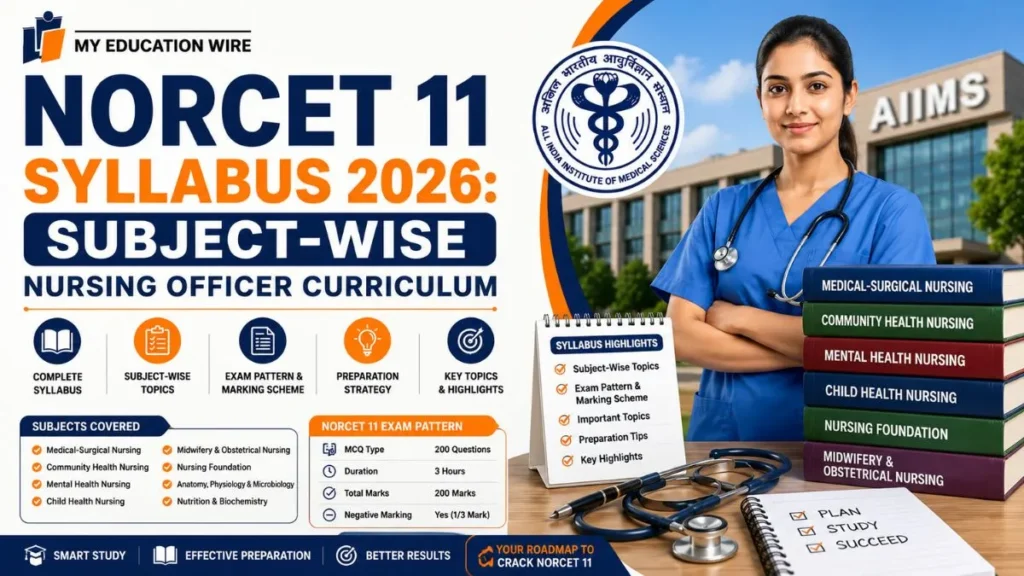
Reviewing the NORCET Syllabus in detail can help you understand the NORCET 11 Exam Syllabus.
Pathology
| Unit | Content |
| I | Introduction • Importance of the study of pathology • Definition of terms in pathology • Cell injury: Etiology, pathogenesis of reversible and irreversible cell injury, Necrosis, Gangrene • Cellular adaptations: Atrophy, Hypertrophy, Hyperplasia, Metaplasia, Dysplasia, Apoptosis • Inflammation: ◦ Acute inflammation (Vascular and Cellular events, systemic effects of acute inflammation) ◦ Chronic inflammation (Granulomatous inflammation, systemic effects of chronic inflammation) • Wound healing • Neoplasia: Nomenclature, Normal and Cancer cell, Benign and malignant tumors, Carcinoma in situ, Tumor metastasis: general mechanism, routes of spread and examples of each route • Circulatory disturbances: Thrombosis, embolism, shock • Disturbance of body fluids and electrolytes: Edema, Transudates and Exudates |
| II | Special Pathology Pathological changes in disease conditions of selected systems: 1. Respiratory system • Primary infections: Pneumonia, Lung abscess, pulmonary tuberculosis • Chronic Obstructive Pulmonary Disease: Chronic Bronchitis, Emphysema, Bronchial Asthma, Bronchiectasis • Tumors of Lungs 2. Cardio-vascular system • Atherosclerosis • Ischemic heart disease • Rheumatic Heart Disease • Infective endocarditis 3. Gastrointestinal tract • Peptic ulcer disease: Gastric and Duodenal ulcer) • Gastritis – H. Pylori infection • Oral mucosa: Oral Leukoplakia, Squamous cell carcinoma • Esophageal cancer • Gastric cancer • Intestine: Typhoid ulcer, Inflammatory Bowel Disease: Crohn’s disease and Ulcerative colitis), Colorectal cancer 4. Liver, Gall Bladder and Pancreas • Liver: Hepatitis, Amoebic Liver abscess, Cirrhosis of liver • Gall bladder: Cholecystitis • Pancreas: Pancreatitis • Tumors of liver, Gall bladder and Pancreas 5. Skeletal system • Bone: Bone healing, Osteoporosis, Osteomyelitis, Tumors • Joints: Arthritis – Rheumatoid arthritis and Osteoarthritis 6. Endocrine system • Diabetes Mellitus • Goitre • Carcinoma thyroid |
| III | Hematological tests for the diagnosis of blood disorders • Blood tests: Hemoglobin, White cell and platelet counts, PCV, ESR • Coagulation tests: Bleeding time (BT), Prothrombin time (PT), Activated Partial Prothrombin Time (APTT) • Blood chemistry • Blood bank: ◦ Blood grouping and cross matching ◦ Blood components ◦ Plasmapheresis ◦ Transfusion reactions |
Adult Health Nursing-1 with Integrated pathophysiology
| Unit | Content |
| I | Introduction • Evolution and trends of medical and surgical nursing • International classification of diseases • Roles and responsibility of a nurse in medical and surgical settings: ◦ Outpatient department ◦ In-patient unit ◦ Intensive care unit • Introduction to medical and surgical asepsis: ◦ Inflammation, infection ◦ Wound healing – stages, influencing factors ◦ Wound care and dressing technique • Care of surgical patient: ◦ pre-operative ◦ post-operative • Alternative therapies used in caring for patients with Medical Surgical Disorders |
| II | Intraoperative Care • Organization and physical set up of the operation theatre: ◦ Classification ◦ O.T Design ◦ Staffing ◦ Members of the OT team ◦ Duties and responsibilities of the nurse in OT • Position and draping for common surgical procedures • Instruments, sutures and suture materials, equipment for common surgical procedures • Disinfection and sterilization of equipment • Preparation of sets for common surgical procedures • Scrubbing procedures – Gowning, masking and gloving • Monitoring the patient during the procedures • Maintenance of the therapeutic environment in OT • Assisting in major and minor operation, handling specimen • Prevention of accidents and hazards in OT • Anaesthesia – types, methods of administration, effects and stages, equipment & drugs • Legal aspects |
| III | Nursing care of patients with common signs and symptoms and management • Fluid and electrolyte imbalance • Shock • Pain |
| IV | Nursing Management of patients with respiratory problems • Review of anatomy and physiology of respiratory system • Nursing Assessment – history taking, physical assessment and diagnostic tests • Common respiratory problems: ◦ Upper respiratory tract infections ◦ Chronic obstructive pulmonary diseases ◦ Asthma ◦ Pleural effusion, Empyema ◦ Bronchiectasis ◦ Pneumonia ◦ Lung abscess ◦ Cyst and tumors ◦ Chest Injuries ◦ Acute respiratory distress syndrome ◦ Pulmonary embolism • Health behaviours to prevent respiratory illness |
| V | Nursing Management of patients with disorders of digestive system • Review of anatomy and physiology of GI system • Nursing assessment – History and physical assessment • GI investigations • Common GI disorders: ◦ Oral cavity: lips, gums and teeth ◦ GI: Bleeding, Infections, Inflammation, tumors, Obstruction, Perforation & Peritonitis ◦ Peptic & duodenal ulcer, Mal-absorption, Appendicitis, Hernias ◦ Hemorrhoids, fissures, Fistulas ◦ Pancreas: inflammation, cysts, and tumors ◦ Liver: inflammation, cysts, abscess, cirrhosis, portal hypertension, hepatic failure, tumors • Gall bladder: inflammation, Cholelithiasis, tumors • Gastric decompression, gavage and stoma care, different feeding techniques |
| VI | • Alternative therapies, drugs used in treatment of disorders of digestive system Nursing Management of patients with cardiovascular problems • Review of anatomy and physiology of cardio-vascular system • Nursing Assessment: History and Physical assessment • Invasive & non-invasive cardiac procedures • Disorders of vascular system- Hypertension, arteriosclerosis, Raynaud’s disease, aneurysm and peripheral vascular disorders • Coronary artery diseases: coronary atherosclerosis, Angina pectoris, myocardial infarction • Valvular disorders: congenital and acquired • Rheumatic heart disease: pericarditis, myocarditis, endocarditis, cardiomyopathies • Cardiac dysrhythmias, heart block • Congestive heart failure, corpulmonale, pulmonary edema, cardiogenic shock, cardiac tamponade • Cardiopulmonary arrest |
| VII | Nursing Management of patients with disorders of blood • Review of Anatomy and Physiology of blood • Nursing assessment: history, physical assessment & Diagnostic tests • Anemia, Polycythemia • Bleeding Disorders: clotting factor defects and platelets defects, thalassemia, leukemia, leukopenia, agranulocytosis • Lymphomas, myelomas |
| VIII | Nursing management of patients with disorders of endocrine system • Review of anatomy and physiology of endocrine system • Nursing Assessment – History and Physical assessment • Disorders of thyroid and Parathyroid, Adrenal and Pituitary (Hyper, Hypo, tumors) • Diabetes mellitus |
| IX | Nursing management of patients with disorders of Integumentary system • Review of anatomy and physiology of skin • Nursing Assessment: History and Physical assessment • Infection and infestations; Dermatitis • Dermatoses; infectious and Non infectious • Acne, Allergies, Eczema & Pemphigus • Psoriasis, Malignant melanoma, Alopecia • Special therapies, alternative therapies • Drugs used in treatment of disorders of integumentary system |
| X | Nursing management of patients with musculoskeletal problems • Review of Anatomy and physiology of the musculoskeletal system • Nursing Assessment: History and physical assessment, diagnostic tests • Musculoskeletal trauma: Dislocation, fracture, sprain, strain, contusion, amputation • Musculoskeletal infections and tumors: Osteomyelitis, benign and malignant tumour • Orthopedic modalities: Cast, splint, traction, crutch walking • Musculoskeletal inflammation: Bursitis, synovitis, arthritis • Special therapies, alternative therapies • Metabolic bone disorder: Osteoporosis, osteomalacia and Paget’s disease • Spinal column defects and deformities – tumor, prolapsed intervertebral disc, Pott’s spine • Rehabilitation, prosthesis • Replacement surgeries |
| XI | Nursing management of patients with Communicable diseases • Overview of infectious diseases, the infectious process • Nursing Assessment: History and Physical assessment, Diagnostic tests • Tuberculosis • Diarrhoeal diseases, hepatitis A-E, Typhoid • Herpes, chickenpox, Smallpox, Measles, Mumps, Influenza • Meningitis • Gas gangrene • Leprosy • Dengue, Plague, Malaria, Chikungunya, swine flu, Filariasis • Diphtheria, Pertussis, Tetanus, Poliomyelitis • COVID-19 |